Save The Date: Oct. 25 2017 – 7th Annual Touring Career Workshop
Are you new to the industry? Are you looking for advice and help on how to break into and maintain a healthy touring career? Looking to make contacts and new friends around the industry?
Chris Lisle’s Touring Career Workshop is the perfect event for you. On Wednesday, October 25, 2017 The Touring Career Workshop takes place from 5pm to 9pm at SoundCheck Nashville, TN. The main event and session begin at 6pm. The Touring Career Workshop is open to anyone and everyone. Cost… NADA… FREE!
Where:
SoundCheck Nashiville
This years sessions include:
- Getting the Gig
- Touring and Retirement Planning
- The Roadie Lifestyle
- Situational Awareness and Safety
- Touring 101
- Production Manager Panel
- Balance: Family and Relationships
- One on one with Joy Black, Adam Warren, Troy Von Haefen, RJ Stillwell
Registration for this year’s workshop will be open on Monday September 18.
Learn more about the Touring Career Workshop by visiting: touringcareerworkshop.com
eSET Skills Test Launched by USITT
 How important do you think it is to have knowledge and understanding of your professional career? How do you express your level of competence in your field to an employer? Sure, you did the college thing, aced your classes and received your degree. Now how about putting that learned knowledge to work. Or maybe you went the school-of-hard-knocks approach to the industry. You learn everything you know while on the job.
Any way you look at it, there needs to be a standard way of measuring ones knowledge of their profession against others or to meet a jobs specific requirements. USITT has announced the launch of their Essential Skills for Entertainment Technicians, or eSET.
More from USITT
This new proficiency program for entry-level technicians has launched its first online skills and safety tests in three disciplines — Lighting & Electrics, Rigging, and Costuming — as well as the basic Terms & Safety Test that’s a prerequisite to take any eSET exam.
In the coming years, USITT’s eSET Council will add exams in other disciplines including Audio, Scenery, Projection, and Wigs & Makeup. eSET offers a way for employers to test their technicians’ skills, and for technicians to show their skill sets.
With concern for safety, liability, and best practices taking center stage in the live events world, USITT has developed this unique tool to measure the preparedness of entry-level employees and volunteers who perform technical tasks.
USITT Executive Director David Grindle said the goal is to give employers confidence that someone with an eSET certificate has the basic skills and knowledge to perform a technical job – at a theatre, school, house of worship, or live entertainment facility.
“If two students come to you with degrees in theatre applying for a job as an electrician, how do you know what they know?” Director David Grindle asked. “With an eSET certificate, you know which candidate has a strong knowledge of the subject.”
eSET tests are written by groups of professionals who hire entry level employees, and are designed to test proficiency at that level. “eSET offers employers the same confidence in a worker at entry level as ETCP gives them on an advanced level,” Grindle said.
eSET comes in two parts. Part 1 is an online exam; Part 2 is a practical exam. Online exams in the first disciplines are live now at www.usitt.org/eset. The first practical exams will be held during USITT 2016 March 16-19 in Salt Lake City. Passing each part earns a certificate; those who pass both written and practical tests also earn an eSET pin.
“Potential employees can bring an employer a certificate stating they have passed only Part 1 of eSET, or Parts 1 and 2,” Grindle said. “Seeing an eSET certificate gives you greater confidence in the skill set of the potential employee.” Current employees are also eligible to take the exams, which cost only $40 for the first subject and are half-price for additional subjects.
eSET also offers a glossary of terms and a mobile app to help beginners learn over 2,000 terms used in entertainment technology. The app for iPhone and iPad can be found here. The android app is expected to go live on Feb. 1. Look for it, and more info about eSET, at www.usitt.org/eset.
Breaking News: PLASA Focus Stamford in November 2012
Just before PLASA Focus Nashville opens tomorrow, details have spilled that PLASA is planning yet another Focus series of mini/regional trade shows in Stamford, CT in November 2012. The only details released so far is that PLASA Focus Stamford will take place November 12-13, 2012.
PLASA is sure to announce more details about PLASA Focus Stamford tomorrow or in the next couple of days while PLASA Focus Nashville is underway. Stay tuned for more details. You can check the PLASA Focus website in the next couple of days to learn more.
CSL’s Next Webinar: Green is a Number
 Creative Stage Lighting has announced their second webinar for 2012, Green is a number. The webinar is scheduled for Wednesday, May 9th at 4:30pm EST. How do you measure the environmental impact of a light fixture? There are many ways to look at it, starting with the light output compared to the energy input. But that’s just the beginning. Take a quick trip through the green valley of sustainable lighting including best practices for lessening the environmental impact of your lighting designs.
Points to be discussed include:
* Memory consoles changed the way shows were cued and lit.
* Automated lighting changed the way shows look.
* DMX512 changed the way consoles are run.
* LEDs changed the way shows are colored.
* Media servers changed the way video is controlled.
* Networking is changing the way shows are built.
* RDM will change the way shows are tech’d.
* Technology is changing everything in the live event production industry.
What’s coming in the future? New technology. Hang on for the ride of your light. You can learn more about the webinar by visiting Creative Stage Lighting’s blog and register for the webinar on GoToMeeting.
CSL Webinar: Emerging, Converging Technologies Is Online
Back on March 23rd, I joined Kevin Lorretto from Creative Stage Lighting on their first webinar of 2012, Emerging, Converging Technologies. After some time, travel and a little trade show in Long Beach… The webinar is up on YouTube thanks to CSL. CSL has an entire line up of webinars planned for 2012. When more are announced, we’ll let you know. Thanks CSl for having me on!
USITT 2012: Session on Creating a Digital Presence
Is anyone else excited that USITT happens later this week?!? USITT has to be one of my favorite shows. Why, it’s all about education and students! USITT is the perfect place to get a good look at what is going on in the industry and get a bit of education while you’re at it. All throughout USITT, there are sessions ranging from almost every aspect of the industry. Best of all… THEY ARE FREE!
On Thursday morning at 9:30am, I’ll be joining Todd Proffitt from SUNY Fredonia and Stage Directions Editor, Jacob Coakley. We’ll be talking about creating a digital presence. The session is all about how to market yourself online and digitally. We will talk about how to setup and display your work on a variety of different sites as well as a mobile version of your work.
It always happens, you’re out, at the local watering hole and run into someone that might be interested in your work. Will you have your book or portfolio? I don’t think so, but you will have your mobile phone. We’ll explore options on how to organize, maintain and having your work ready at any moment.
Make sure to join in on the session. If you can’t make it, we’ll have the materials up online after the session.
Join CSL and iSquint & PLSN Editor, Justin Lang for a Webinar
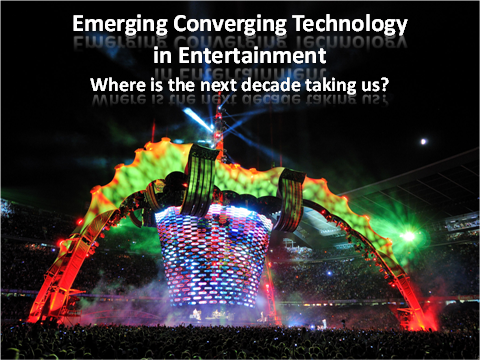
Creative Stage Lighting is kicking off their 2012 Webinar season with a our very own Editor, Justin Lang! On Thursday, March 22nd and 3pm EST, CSL will be hosting a webinar on Emerging, Converging Technologies in Entertainment. CSl Sales Director, Kevin Loretto will be hosting the webinar with guest Justin Lang. The Webinar is FREE. All you have to do is register through GoToMeeting. We hope to see you there!
ETC Cue: Recap Part 1
 Last week, around 180+ folks attended the inaugural ETC end users conference known as ETC Cue. It was overheard that it was about 2 years in the making, and the preparation certainly showed.
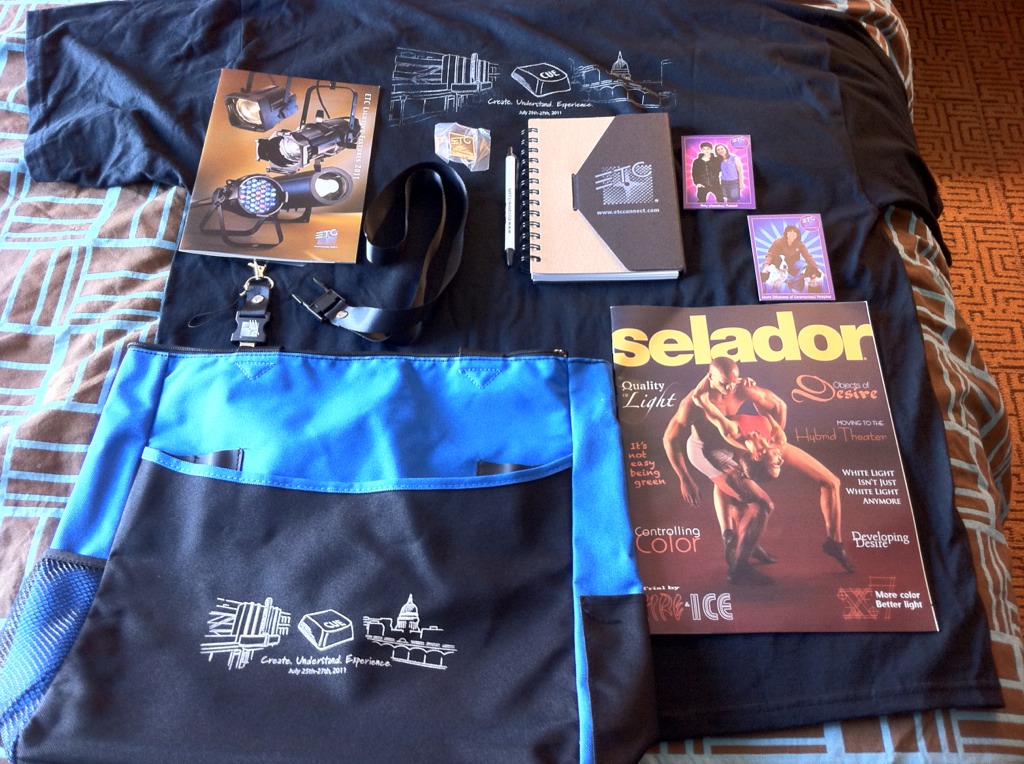 Upon arriving, conference goers were given their schedule (the registration process required us to choose which sessions we were initially interested in, although Tuesday and Wednesday sessions were considered “open” but more on that later) as well as an awesome, and quite useful, goodie bag containing a T-Shirt, pen and notepad, ETC pin, Selador newsletter, presenter trading cards, fixture line literature, and of course the bag itself. The coolest is the nametag and lanyard: the lanyard itself is a USB flash drive, which contained the powerpoint presentations of the whole conference, plus practice workbooks for the consoles! As an educator, this part caused a fair bit of giddiness.
The first official day was Monday July 25th, which was a pre-conference day (beginning with breakfast) where attendees could choose to register for a console-programming class (with their initial registration) or take a detailed factory tour, followed by an evening welcoming reception.
This attendee chose the console-programming route and was lucky to be placed in a class led by Anne Valentino, Nick Gonsman, and Peter Weigand for advanced programming. The first surprise of the conference was in these programming classes, where we learned that we in the Eos Family were to be training on software version 1.9.8, which is currently in closed beta and suggested to be released in the 4th quarter, near September.
For those curious on the topics discussed, our class created a list of items we wanted to know more about. We covered: the changes that are coming in the software (including a new “shift” key to facilitate new commands, startup and shutdown macros, and the ability to dim the console’s LED Littlelites). We focused on terminology and process: learning about background space vs. foreground space, workflow (referenced vs. absolute data), locking palettes, how the console “sees” the differences between Record and Record Only, Selective Storing, Filters, Null Data, Shielded Subs, Block and Assert, tips on marking, working with multiple cue lists, working with Query, working with Trace, Sub mapping, timing on Subs, and altering time by percentage. By 4 pm we were armed with pages of notes and pleasantly saturated brains.
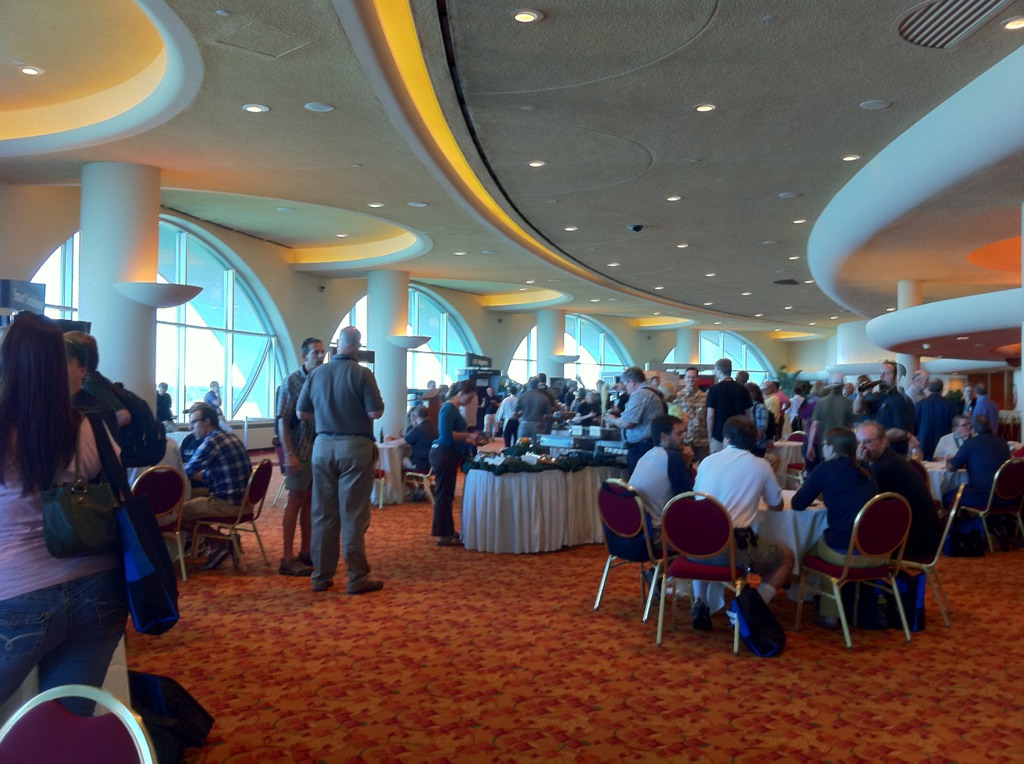
 The welcome reception gave us a chance to decompress and network with old and new friends over a passel of appetizers (and the mashed potato martinis deserve a mention). Most of the reception was a blur however once the Gio consoles were rolled into the room. Everyone crowded hungrily around the three consoles; eager to hear everything the ETC representatives could tell us about them.
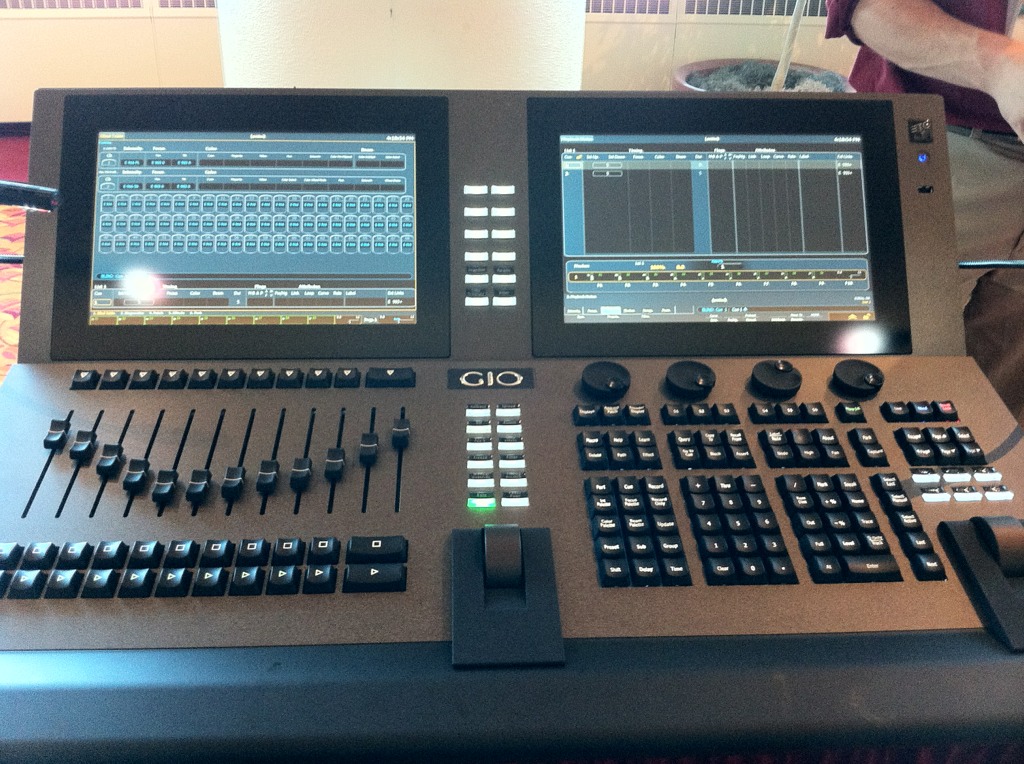
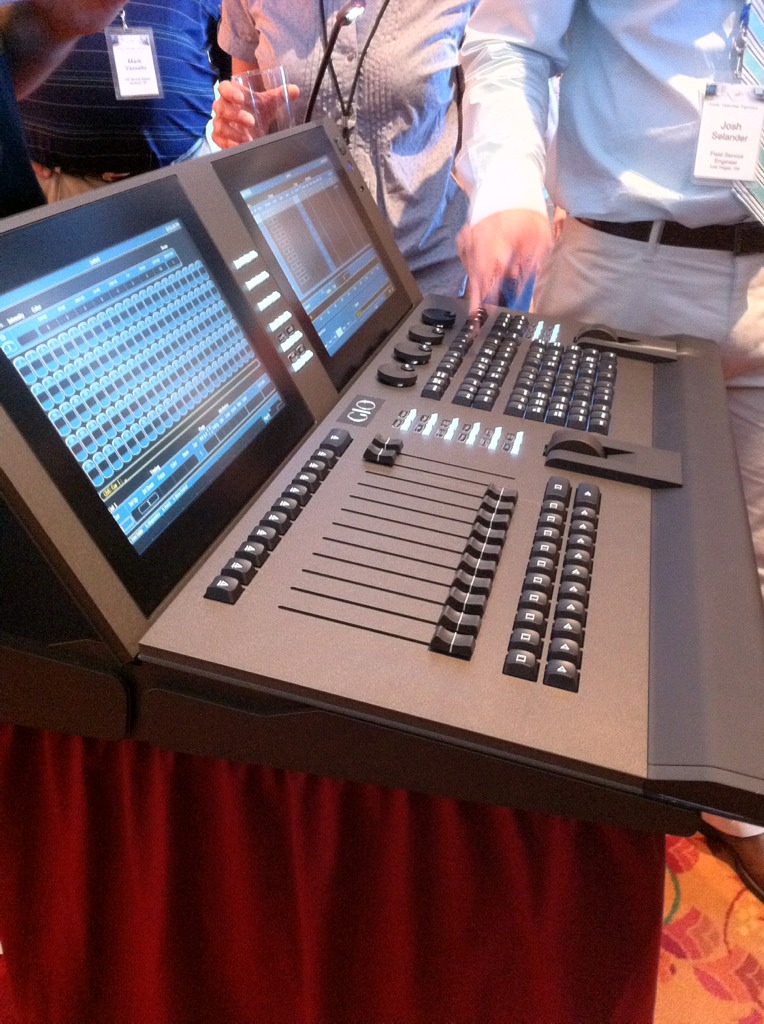
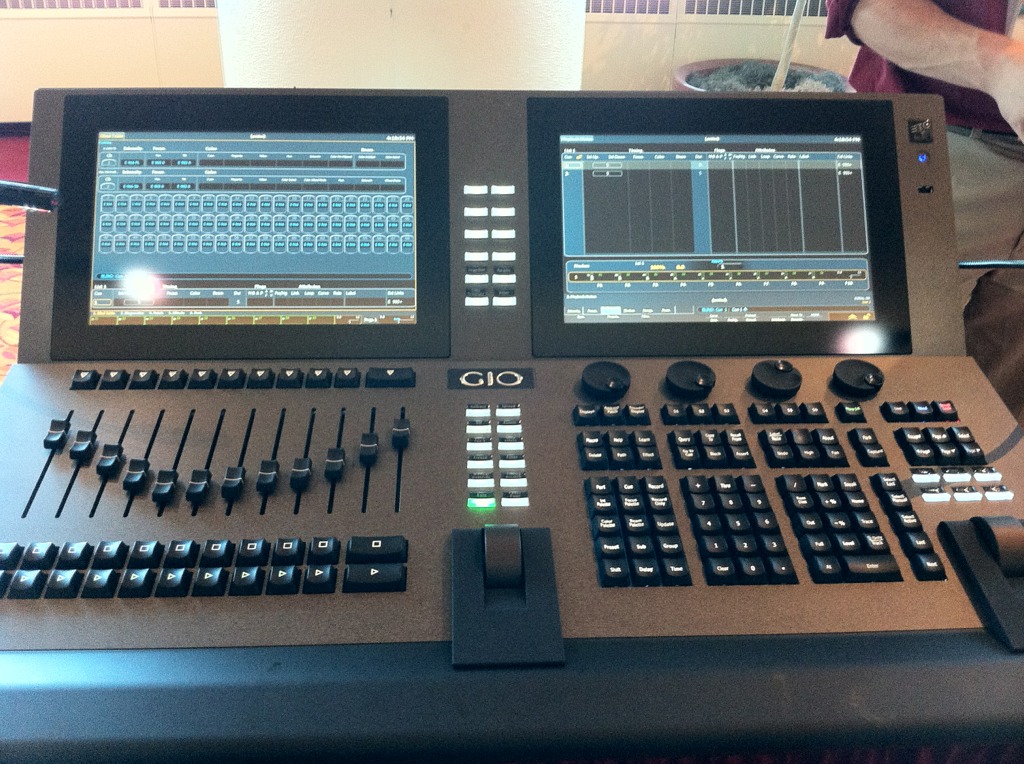
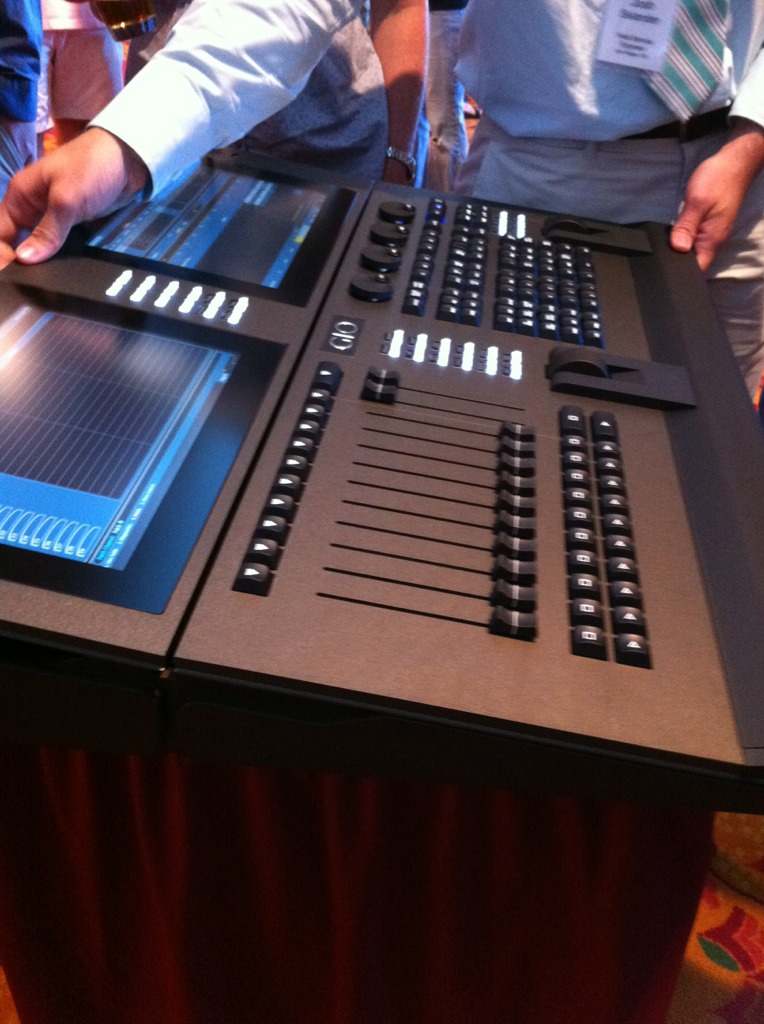
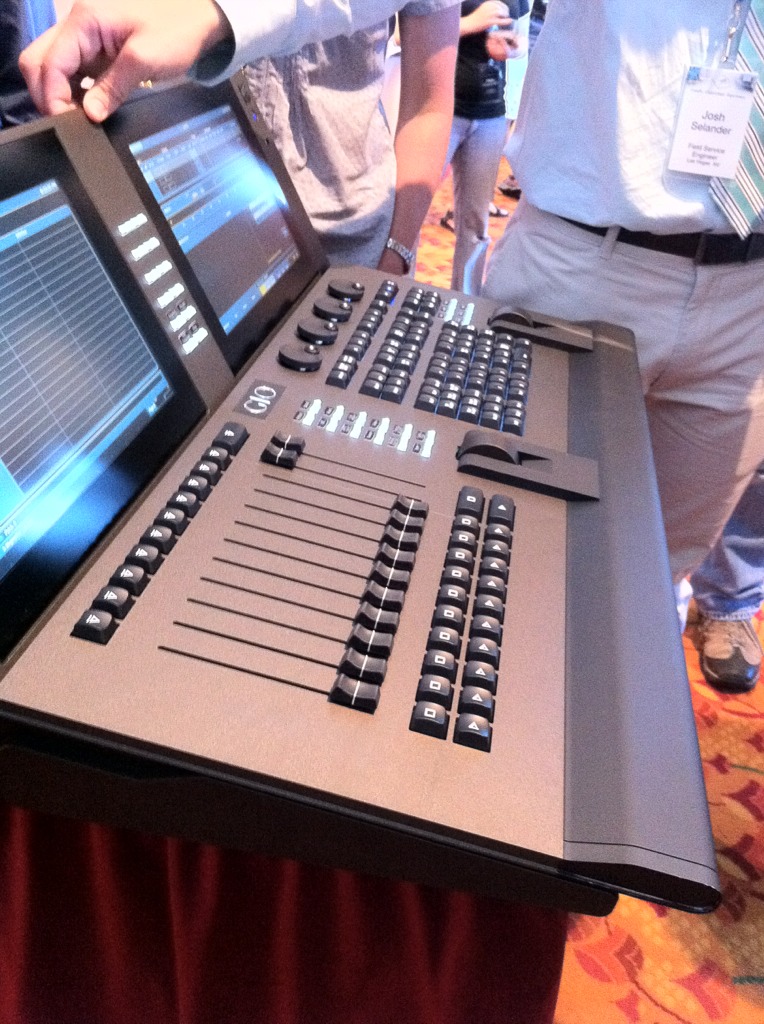
As highlighted earlier, this desk is intended to fit between the Ion and the Eos, literally and figuratively, as the physical size indicates as well as the output/address configurations. It will support the same protocols (Net 2 and Net 3, as well as DMX) as their other consoles, and can support up to 3 additional external monitors (DVI, or VGA with an adaptor). The soft keys and other control buttons lie in between the fader area and the keyboard area, and their corresponding labels are also backlit. There are 8 non-labeled soft keys that are placed between the touch screens; presumably these are additional multi-functional soft keys and/or user definable macro keys. The keys at the top of the faders are the load keys, and the faders are motorized. The keys below are the same Stop/Back and Go buttons, but are marked with the universal square symbol for Stop (backlit in red) and triangle “play” (backlit in green). All of the console keys are backlit, are user configurable as far as brightness, and will dim out after a set amount of time. The encoder wheels on this console are above the control keypad area, and utilize the right hand touch screen for their page navigation. There are no slots for button modules, as in the Eos console. The internal screens appear smaller than the 15” screens of the Eos, but it fits well with the form factor (and appear to be a higher resolution). 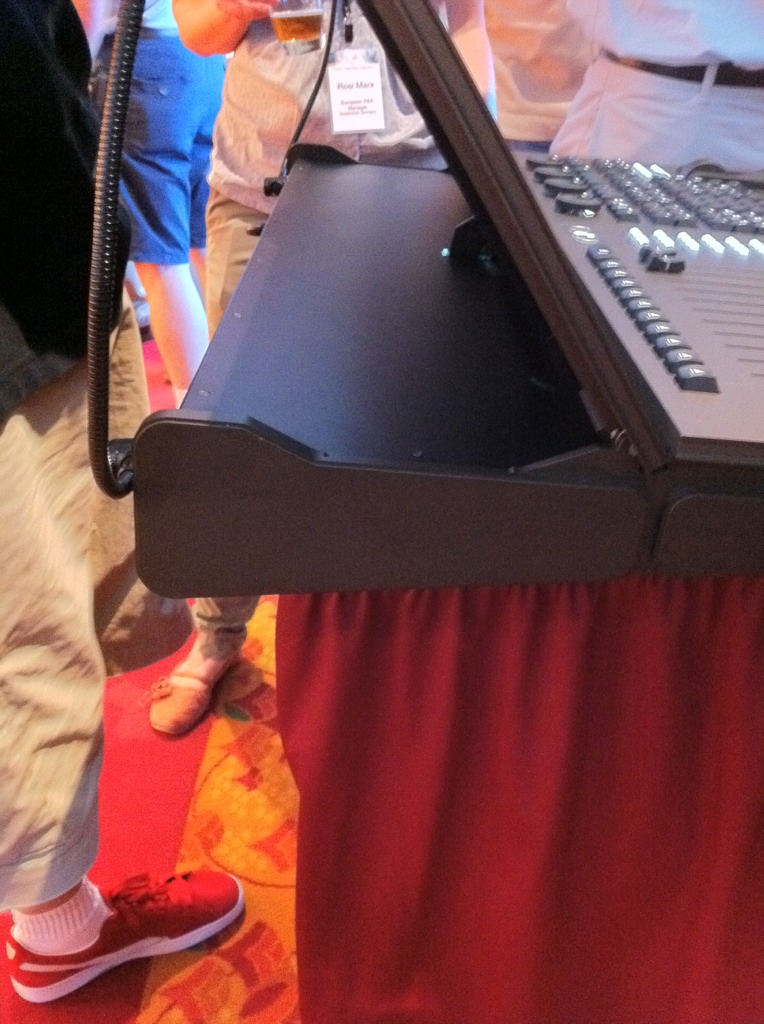 The repositionable screens are a highlight; they are super thin, hinge at the bottom of the screens (the pivot can be seen behind the screens at the center bottom on the image to the right) and the folding action operates with one hand via a button at the top in the middle and allows the screens to fold down at any position from up to completely flat. The coating on the metal is so scratch resistant, that when one of the reps took a quarter and scrubbed it over the fascia, it wiped clean. More information will be forthcoming soon, as we heard that it is slated to be in the area reps hands in September.
What a great end to the first day of the first ETC Cue conference! The recap of day 2 will come in ETC Cue: Recap part 2.
ETC CUE: A Glimpse of the Newest Eos Family Member – GIO
7/25/2011…at the welcome reception for the inaugural ETC CUE event, ETC surprised and delighted their attendees by rolling out 3 units of what will be the newest addition to their Eos family line of consoles, the Gio. Weighing in at just under 50 lbs (a bonus for shipping concerns) this new addition geared for the mid-range space will sport a similar layout for keyboard commands, 10 motorized faders, master faders, and the 2 touch screens that is familiar to Eos users.
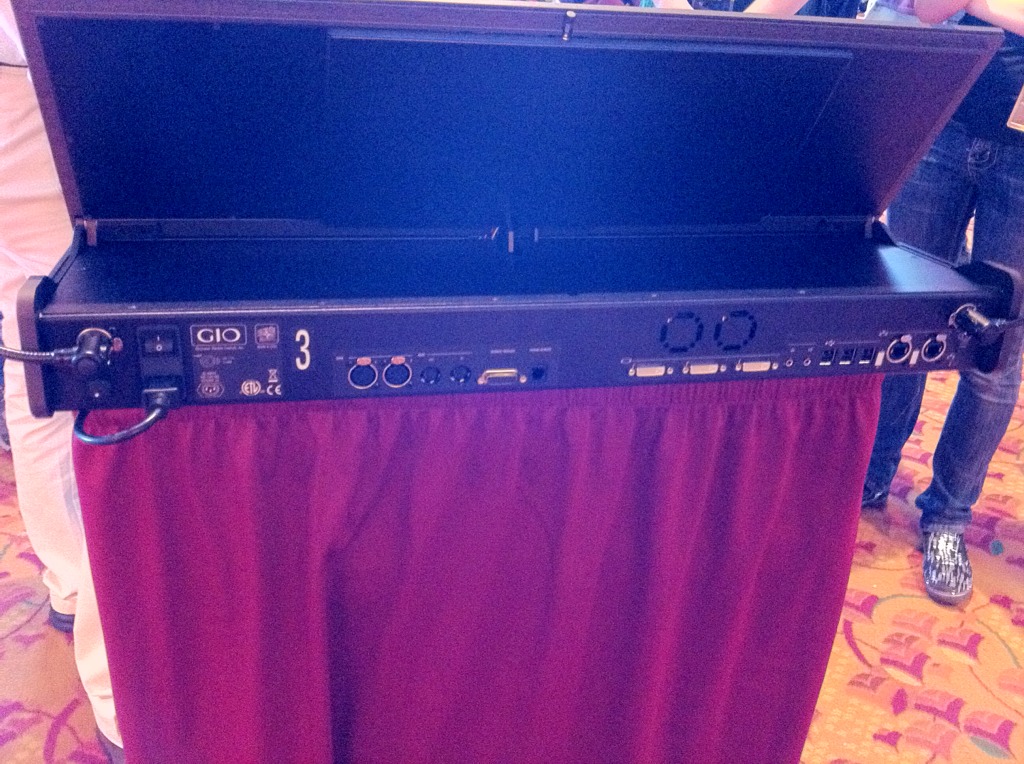
Those two touch screens are housed in a thin section that will tilt flat for shipping, up for viewing, and can be locked at any position in between. One USB port is on the front, with more available on the back. 2 Ethercon ports, 2 DMX ports, and 3 DVI ports were also spied on the back.
This console also supports backlit keys (the “clear” button helpfully highlights in red when a syntax error occurs) and the backlighting of these keys will have dimmer control; as will the LED console work lights. The finish of the console is highly scratch resistant and easy on the eyes.
Set to come in configurations of 2000, 4000, 6000 and 8000 outputs, the Gio is expected to list right between the Ion and the Eos price points.
Keep an eye out for the official release this fall for more and final details!
ETC CUE: Introduction!
Create. Understand. Experience.
ETC’s inaugural end-user event began today located alongside the beautiful Lake Monona in Madison, WI at the Monona Terrace.
Day 1 was full of pre-conference console training sessions, from the novice to the expert. Others chose to participate in a factory tour, and the day will close with a welcoming reception.
Stay tuned for photos, announcements, and details from sessions I’m attending over the next few days.
USITT 2011 Recap: Reflections from the Light Lab
It is hard to believe how quickly time flies. Two months ago many folks were returning and recuperating from another successful USITT conference in North Carolina. Every other year the Lighting Commission hosts a “light lab” and the 2011 lab was certainly a highlight; as six of the commissions sessions were held there in Ballroom A/B.
What is the light lab? It is many things: a space where sessions are presented; a place for students, educators and professionals to mingle and network; and a neutral ground for anyone who wishes to learn about equipment they do not know about or perhaps to share their experiences, tips and tricks to those who are curious about the lab and its components.
This year, there were many great sessions presented in the lighting lab, beginning with “troubleshooting the lighting rig.” After a full day of loading in, patching, and troubleshooting to get the rig working, presenters “broke” portions of the system for volunteers to put into practice the topics and steps discussed. “LED’s in the Light Lab” introduced a number of the latest fixtures to a packed house: over 300 attendees! Examples of various color temperatures of “white” light, color mixing, color saturation, and remote focus-ability were highlights of this session. Day 2 brought “Lighting Projects for the Classroom” which focused on activities within a light lab, while also acting as a “call for submissions” for the forthcoming update to the 1992 USITT publication “Practical Projects for Teaching Lighting Design – A Compendium.” Submissions are being collected at this time, and a juried selection is slated to take place later this year. (Questions regarding submitting a project can be directed through the USITT Lighting Commission Page later this summer.) Rounding out day 2’s activities in the lab was “Lighting Make-up, Costumes & Multi-Ethnic Casts” giving lovely visual examples of how lighting enhances, or deters from, the form. The last day in the light lab began with a cross-commission session, “Health & Safety: Rigging Safety for Ground Support Truss” which utilized the structure of the rig to its full extent and was a good reminder to all of the safety checks and practices to be performed when working with ground supported truss. Closing the light lab sessions was the “Using Color in Lighting” presentation by Mr. Mark Stanley; a great refresher for the experienced and valuable information and questions for the novices.
Light Lab demystified:
One of the things I hear most often in the light lab is: this is great! Why is there not a light lab next year? The light lab takes a lot of planning, time, money, energy, and volunteers to put together. Sessions are proposed and chosen during the conference a year, or sometimes two or more, in advance. Members of the light lab committee and national committee are charged with various tasks from: chairing the lab in its entirety, sourcing and securing equipment, sourcing and securing a site and style of lab (flown truss, ground support truss, theatrical venue, etc), drafting the lab plot, serving as master electrician for the lab, coordinating student volunteers (those volunteers who are current students and who work the conference for their registration), coordinating adult volunteers (the rest of the volunteers), coordinating sound and video needs, coordinating and consulting on rigging, coordinating signage, consulting on technology, on-site coordinating, and a venue liaison, among many other roles that must take place to generate the lab.
Tips for getting involved:
Every year, whether it is a light lab year or a non-lab year, the commission holds meetings where the commissioners and light lab committee members are present. Talking to one of them directly at any time during the conference and expressing interest is a great way to start; if individual interest becomes peaked after the conference is over however, a direct email contact can be made through the USITT contact sheet or generally through the vice commissioner of communication, who will pass along the information to the appropriate coordinator or commissioner.
The light lab is organic from year to year, some years require more from volunteers than others yet those who give graciously gain much in the end, if they choose to partake of it. This year many were able to see (some for the first time) a self-climbing truss system graciously loaned to the lab by Thomas Truss. For those in education, or in places with limited budgets, having the opportunity to have some hands-on time with four separate consoles all actively on the network at once was something to remember. Having the opportunity to learn from, or just observe master programmers such as Bobby Harrell at the Strand VL 16 desk or Hideaki Tsutsui at the GrandMA, or listening in as ETC’s Tracy Fitch discussed the intricacies of having all four consoles online at once via streaming ACN was a particularly nice treat.
If you missed it this year, consider it for USITT 2013. It is a great place to learn, to grow and to give back.
***************************
Images from the 2011 USITT Lighting Lab:
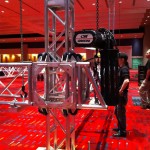
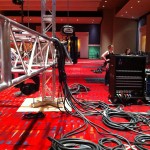
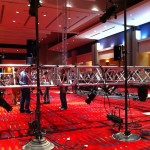
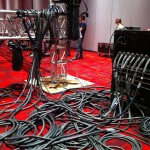
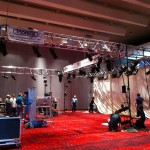
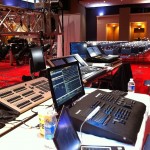
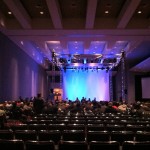
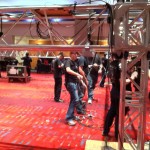
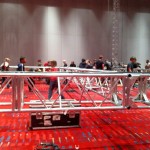
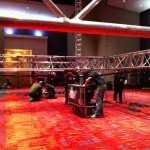
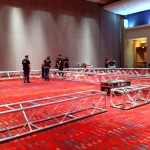
***************************
Some of the donors and their equipment seen in the 2011 USITT Lighting Lab:
AC Lighting
- Chroma Q Scrollers
- Strand VL 16 Console
- Chroma Q Color Force
- DMX & Scroller Power
ACT Lighting
- Grand MA 2 Lite
- Clay Packy Alpha Spot 700’s
Phillips Entertainment & Vincent Lighting
- VL 2500 Spots
Apollo
- Smart Color Pro Scrollers
- Smart Move Gobo Rotators
- Scroller and DMX Cable
- Gel Package
West Virginia University
- Tool Box
- Cable
- Fleenor Splitter
- Booms
- 18” Side Arm
- Gel Cutter
Altman
- Fresnels
- 3-Cel Far Cycs
Syracuse Scenery & Stage Lighting
- Custom made Cyc
Barbizon
- Connectors
Rosco
- Gel Package for Mark Stanley
Catawba College
- Pipe for Cyc
SUNY Fredonia
- Truss Protectors
ETC
- Dimmer Rack
- Fixtures
- EOS Console
- Element Console
- LED Fixtures
- Cable
Thomas Truss
- Custom Built Rig
USITT Elite Training – Day 3
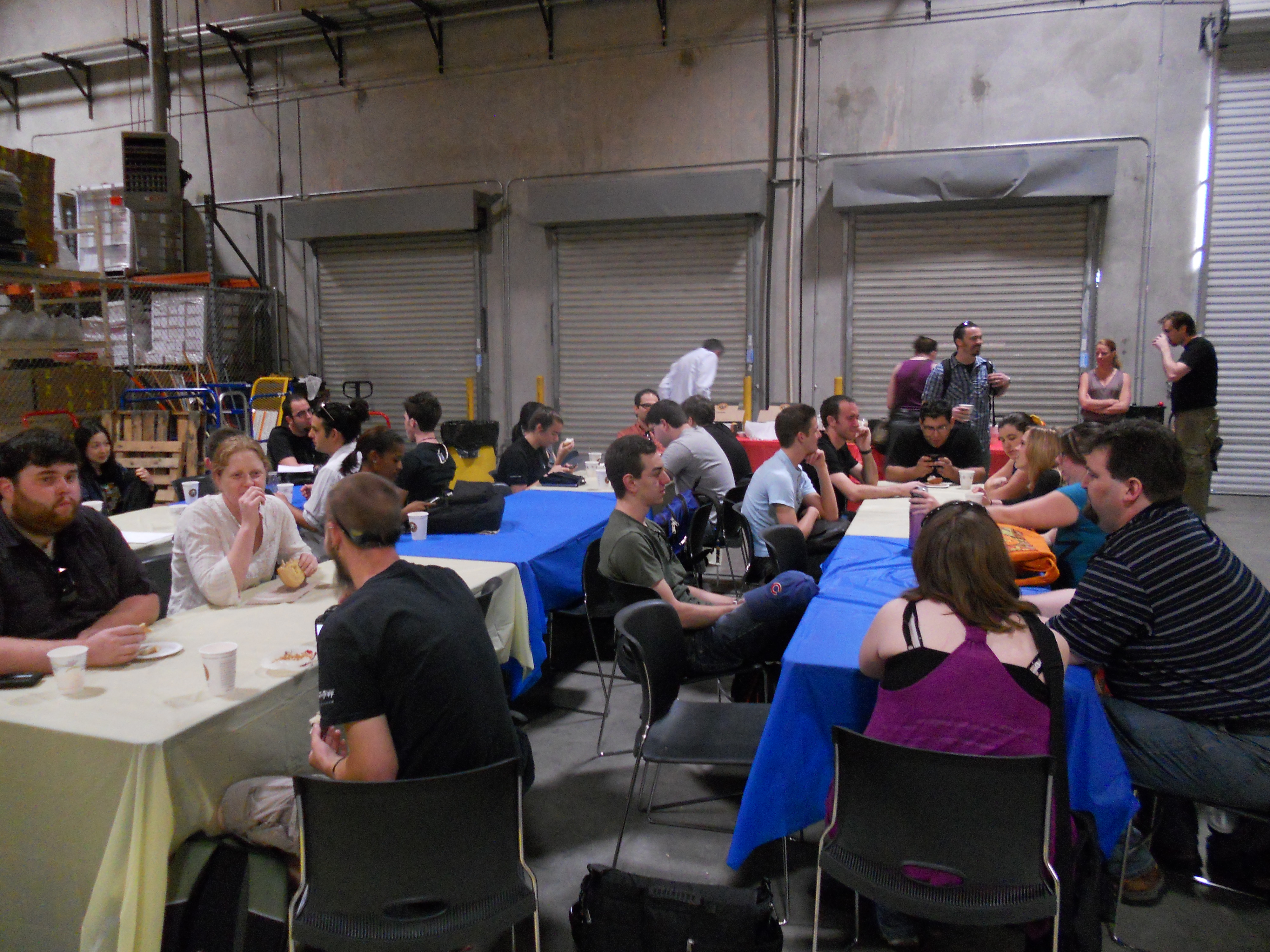
Breakfast at the training centre
Man am I exhausted. For the past three days Cirque Du Soleil and USITT have taken myself and 31 others on a chance of a life time. From 8:30AM till 5 sometimes 11PM we were at the mercy of the schedule, and boy was it worth it.
Today we summed up our training. In the automation section we practiced on the control boards a bit more. Joe and I were on the Acrobat G6. Boy is that thing a beast. In class we learned more about the shell of the board, learning how to change limits and make additions and corrections to the database. As well we learned how to “sculpt” a path using the eChameleon software. It was great to have hands on experience in this section as most colleges do not have access to funds in order to afford most of the gear we were using. But I have to give one more big shout out to our instructor Alex Hitchcock of Stage Technologies. He was a great instructor with years upon years of experience.
Then we were off to Mystere. It was great to see this show last as it was a great culmination from new and fancy to the oldest Cirque show in Vegas. Seeing this space allowed us to see how and why Cirque made decisions on later productions. It was also great to see a Cirque show with a larger focus on acrobatics. We toured along side a practice for the trapeze artists.
 This space just has so much history to it. It was great to walk down the hall of memories and see regards to past and present performers, singed drum sticks, a drum head from a large Japanese drum etc…
One of the coolest elements for me though was the paint treatment all over the set. It was my favorite of any show I have ever seen. Maybe thats because I’ve spent way to much time with my scenic painter/ set designer girlfriend, but it was fascinating to see the different treatments and techniques, as well to learn that the original floor had anywhere from 90 to 200 different layers of paint. In all it seems like a great show and has tons and tons of history.
This experience has been like none other. I want to thank all those at Cirque and USITT for this opportunity, my brain is full with so much more information all of which I will bring back and share with my fellow peers. Students, I urge you all to apply for next year’s Elite Weekend. It was a simple FREE application form, for a wonderful FREE training seminar. So if you want to see what it is Cirque does and how they do it, fill out and application and APPLY APPLY APPLY!
Once again thank you everyone at Cirque and USITT as well as my fellow students, many bonds were made this weekend and thru the awesome world of Facebook I hope we will continue to see each other in the future.
Thank you everyone, it’s been a blast!

Good-bye Vegas!