Martin Macula: A Remote Followspot System by Martin Pro
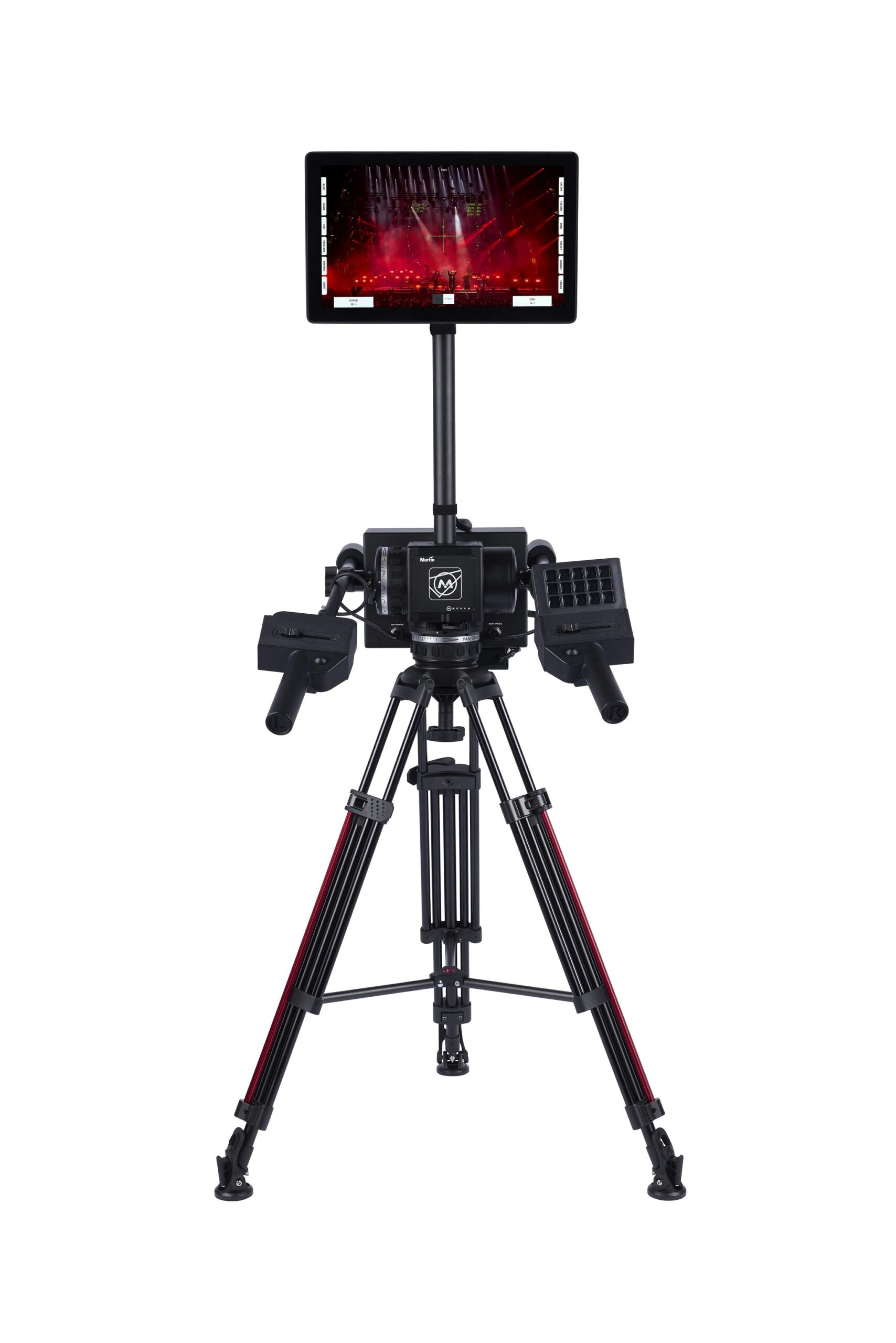
Martin has been in the automated followspot game for a while now, and Macula is the company’s most fully realized take on the concept: a remote follow spot system built around a dedicated base station that puts the operator in a “virtual position next to the fixture” rather than up in a beam, behind a conventional follow spot, or squinting at a monitor from across the room.
The idea is familiar to anyone who’s worked with robotic followspot systems — mount a camera on a moving light, feed the camera view to an operator, let them steer with a physical control surface. What Martin has engineered here is the control side: a freestanding base station with a high-resolution fluid head encoder (adjustable drag), a 15.6″ touchscreen, and handlebar-mounted controls including motorized faders, action buttons, z-rollers, and 15 LCD shortcut buttons on the right handle. It’s purpose-built operator furniture, not a repurposed tablet on a stick.
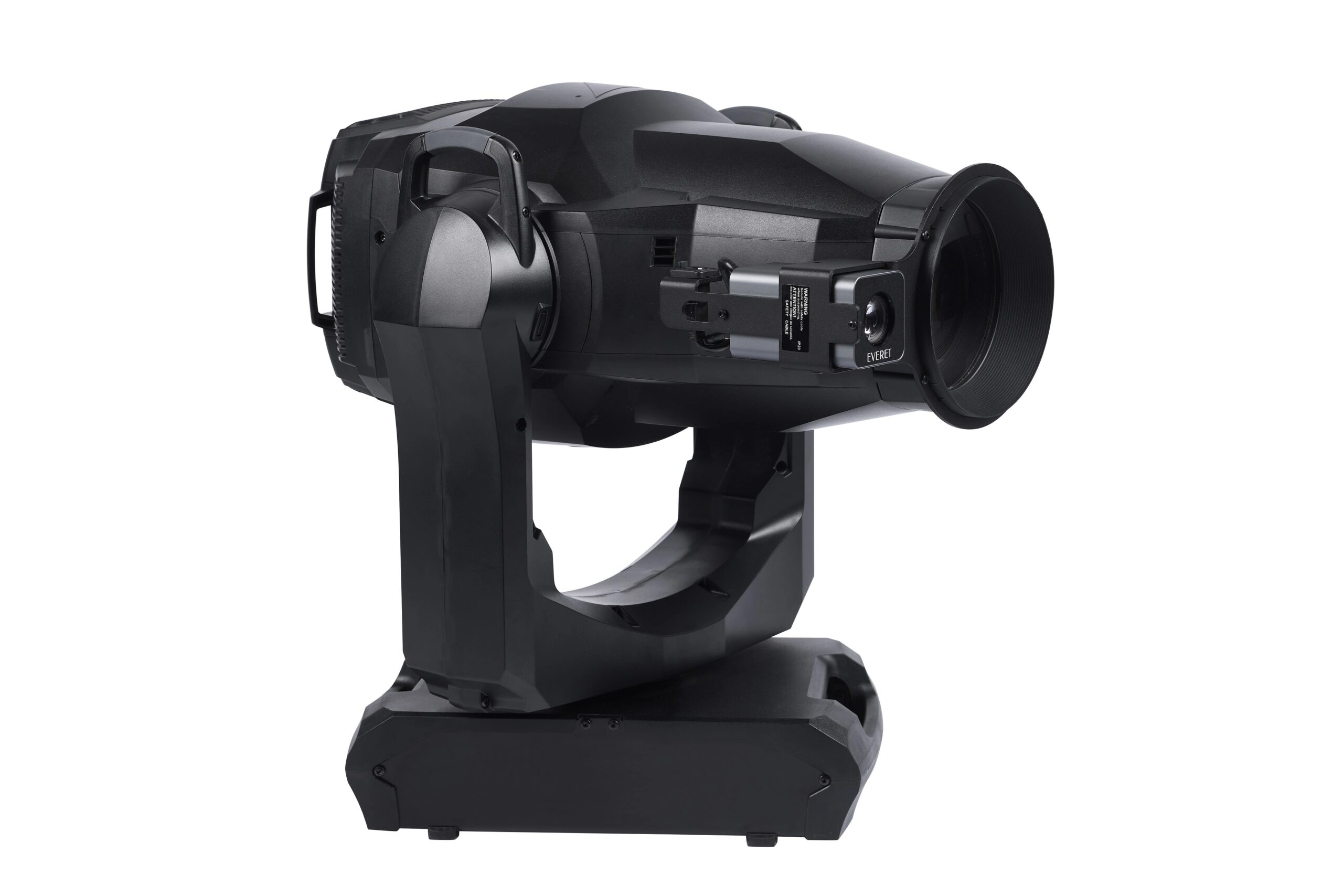
Camera input is NDI HX2 over standard network — no dedicated video cable runs between fixtures and the base station. Supported cameras include the Everet EVZ220/EVZ230, Aida HD-NDI-X20, and BirdDog PF120. The system is brand-agnostic: any moving head can be fitted with a compatible camera, and any moving head without a camera can be pulled along as a secondary follower. Martin says it works especially well with the MAC Ultra Performance, MAC Viper XIP, and MAC Encore Two — fixtures tuned for smooth, responsive movement.
Control merging is where it gets interesting for complex shows. Movement can be handed off between the base station and the lighting console on a cue-by-cue basis — the console runs it during one section, Macula takes over for another, and additional parameters (dimmer, color, CTO, frost, zoom, iris, focus) can be split between them. A single base station can control one fixture, toggle between multiple fixtures with cameras, or run multiple fixtures simultaneously in follow mode. The system also outputs PosiStageNet, sending XYZ position data to third-party applications for tracking integrations.
Specifications
Macula Base Station
- Dimensions: 835 × 857 × 1,450mm (32.9 × 33.7 × 57.1 in.)
- Weight: 20.1 kg (44.3 lbs.)
- Control surface: fluid head encoder (adjustable drag), 15.6″ touchscreen, left handle (motorized fader, action button, z-roller), right handle (motorized fader, action button, 15 LCD shortcut buttons, z-roller)
- Camera input: NDI HX2, up to 1920×1080 @ 60fps
- Compatible cameras: Everet EVZ220, EVZ230 — Aida HD-NDI-X20 — BirdDog PF120
- Fixture control: Pan, Tilt, Dimmer, Color, CTO, Frost, Zoom, Iris, Focus
- Merging: autonomous or merged with lighting console, cue-by-cue assignable
- Network output: Art-Net (up to 4 universes) or sACN (up to 32 universes)
- PosiStageNet output: XYZ position data to third-party systems
- DMX: preset and bank recall via DMX
- Connections: 1× etherCON (NDI/camera/PSN), 1× etherCON (Art-Net/sACN/PSN), IEC C14 power, Neutrik HDMI, Neutrik USB ×2
- Power: 100–240V AC, 30W max | IP20
- Mounting: tripod (included) or third-party truss/surface mount
Macula Camera
- Dimensions: 70 × 70 × 116mm (2.8 × 2.8 × 4.6 in.)
- Weight: 0.6 kg (1.3 lbs.)
- Connection: 1× etherCON (NDI video out + PoE in)
Learn more about Martin Macula by visiting martin.com.

LatestHeadlines
- Cameo's ZIYA Series Splits the Difference Between Wash and Punch in an IP65 Package
- Luminex GigaCore Firmware v1.9.2: IGMP and QSFP Fixes for O26-I, SFP Tuning
- Disguise Replaces Disguise Cloud with MyDisguise, Teases X Series Launch
- Weekend Roundup — September 21–26, 2026
- Neutrik's FIBERFOX Line Gets Ruggedized for Harsh Environments